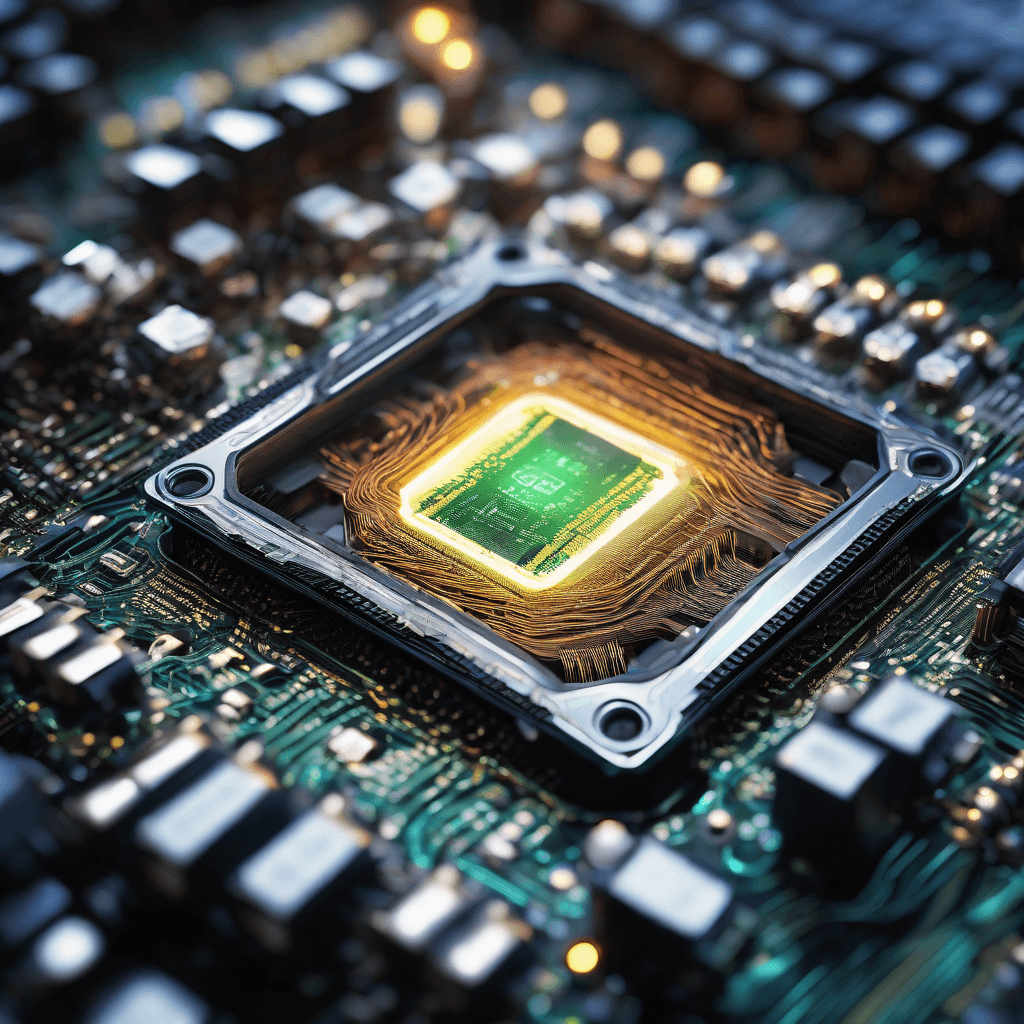
The Unseen Enabler: Montage RCD05’s Critical Role in AI & Data Centers
The relentless pursuit of faster Artificial Intelligence (AI) and more robust data centers has pushed the boundaries of computing infrastructure. In this high-stakes race, every component matters, and often, the most critical innovations operate unseen, deep within the server architecture. One such foundational innovation is the Register Clock Driver (RCD), and at the forefront of this technology stands Montage Technology’s Gen 5 DDR5 Register Clock Driver (RCD05). This sophisticated component is not just an upgrade; it’s a vital enabler, orchestrating the rapid flow of data that powers today’s most demanding AI models and hyperscale operations. This article unpacks why the Montage RCD05 is not merely another chip, but a cornerstone for enterprise IT and the future of AI, laying the groundwork for unprecedented performance and reliability.
The Silent Workhorse: Understanding Register Clock Drivers (RCDs)
What an RCD Is and Why It’s Indispensable
At the heart of every high-capacity server memory module (RDIMM – Registered Dual In-line Memory Module) lies a critical component known as the Register Clock Driver (RCD). Its fundamental role is to manage and distribute command, address, and clock signals from the CPU to multiple DRAM chips on a memory module. Without an RCD, the electrical load from numerous DRAM chips would degrade signal integrity, leading to data errors, system instability, and drastically reduced memory capacity and speed. Essentially, the RCD acts as a signal buffer and repeater, ensuring that all DRAM chips receive clean, synchronized signals, which is paramount for stable and high-performance operation in complex server memory architecture.
The DDR5 Imperative
With each new generation of dynamic random-access memory (DRAM), speeds increase exponentially, and densities grow, demanding even more sophisticated signal management. DDR5 memory, the latest standard, doubles the bandwidth potential and capacity per module compared to its DDR4 predecessor, reaching unprecedented data transfer rates. This leap in performance comes with inherent challenges: higher frequencies make signals more susceptible to noise and degradation. This is where advanced RCDs, such as the Montage RCD05, become not just beneficial, but absolutely critical. They are the silent gatekeepers ensuring that the promises of DDR5—its speed, efficiency, and capacity—can actually be realized in demanding server environments. Without a robust RCD, the inherent instability at these higher speeds would render DDR5 almost unusable for enterprise-grade applications.
Expert Insight: “The transition to DDR5 represents a paradigm shift in memory technology, where signal integrity at extreme speeds becomes the primary bottleneck. Advanced RCDs are the lynchpin, ensuring that the theoretical benefits of DDR5 translate into practical, reliable performance in real-world server deployments.”
Montage Technology’s Expertise
Montage Technology has long been recognized as a leader in specialized memory interface components. For years, they have been at the forefront of developing RCDs and other essential chips that enable high-performance memory modules. Their deep expertise in signal processing, low-power design, and high-speed circuit integration has positioned them as a trusted partner for memory manufacturers and server OEMs worldwide. The introduction of their Gen 5 DDR5 RCD05 is not just an incremental update; it’s the culmination of years of dedicated research and development, solidifying their standing as an innovator critical to the advancement of memory infrastructure.
Montage RCD05: Precision Engineering for Demanding Workloads
Unpacking Gen 5 Advancements
The Montage RCD05 represents the pinnacle of DDR5 RCD technology, embodying a suite of specific technical innovations designed to meet and exceed the demands of next-generation computing. Key advancements include enhanced equalization techniques, which compensate for signal loss and distortion across the memory channels, ensuring superior signal integrity even at the highest DDR5 data rates. It also incorporates sophisticated clock and data recovery (CDR) mechanisms that reduce jitter and improve timing accuracy, crucial for reliable operation at high frequencies. Furthermore, the RCD05 often includes advanced power management features, optimizing energy consumption while maintaining peak performance, an increasingly vital consideration for large-scale data centers. According to a report by Madshrimps.be, the RCD05’s design focuses on enabling speeds up to DDR5-5600 and beyond, a testament to its forward-thinking engineering.
Pro Tip: When evaluating server memory, don’t just look at raw speed. Investigate the underlying components like the RCD. A superior RCD ensures that the advertised memory speeds are actually achievable and stable under real-world server loads.
The Performance Multiplier Effect
The RCD05’s role extends beyond simply enabling higher speeds; it acts as a performance multiplier for the entire DDR5 RDIMM ecosystem. By optimizing signal delivery, it allows the CPU and GPU to access data with minimal latency and maximum reliability. This is particularly crucial for applications that are heavily reliant on `memory bandwidth optimization`, such as large-scale databases, virtualization platforms, and, most notably, AI workloads. When data can flow more efficiently between the processor and memory, the entire system operates more effectively, reducing processing bottlenecks and increasing overall throughput. This translates directly into faster task completion, more efficient resource utilization, and a tangible boost in computing power.
Built for Scale and Resilience
Data centers and AI server environments operate 24/7, demanding components that can withstand continuous, high-intensity workloads. The Montage RCD05 is engineered with scale and resilience at its core. Its robust design principles ensure stable operation even under fluctuating temperatures and power conditions, common in large-scale deployments. Features like built-in error detection and correction capabilities within the RCD itself help to prevent data corruption at the memory interface, adding an extra layer of reliability. This focus on long-term stability and fault tolerance is critical for maintaining uptime and data integrity in environments where even momentary disruptions can have significant financial and operational consequences, especially within `hyperscale computing` infrastructures.
Fueling the AI and Data Center Revolution
Accelerating AI Model Training and Inference
The impact of improved memory bandwidth directly correlates with the speed and efficiency of AI model training and inference. Modern AI models, particularly deep neural networks, require vast amounts of data to be fed into GPUs and specialized AI accelerators at incredibly high speeds. Every cycle saved in data access translates to faster training times, enabling researchers to iterate on models more quickly and deploy AI solutions sooner. For inference—where trained models process new data—optimized memory access means real-time responsiveness for applications like autonomous driving, natural language processing, and medical diagnostics. The Montage RCD05, by facilitating maximum DDR5 performance, becomes an indispensable component of any cutting-edge `machine learning infrastructure`.
Hyperscale Efficiency and Data Throughput
In hyperscale data centers, even marginal gains in efficiency or throughput can result in massive savings and performance improvements across thousands of servers. The RCD05’s ability to maximize DDR5 memory performance contributes significantly to the overall efficiency of these massive operations. Faster memory means fewer idle CPU cycles waiting for data, leading to better utilization of expensive computing resources. This not only boosts the data throughput of `cloud data management` systems but also allows for greater workload consolidation, reducing the physical footprint and energy consumption per unit of work. For organizations running vast distributed systems, such fundamental optimizations are key to maintaining competitiveness and sustainability.
Enhancing System Reliability for Critical Infrastructure
For `enterprise IT hardware` supporting critical business operations, reliability is paramount. Unplanned downtime or data corruption can lead to significant financial losses, reputational damage, and operational disruptions. The robust signal integrity and error prevention capabilities enabled by the Montage RCD05 play a crucial role in enhancing overall system reliability. By ensuring stable and error-free communication between the CPU and DRAM, it minimizes the risk of memory-related errors, which are notoriously difficult to diagnose and can cascade into system-wide failures. This foundational stability is essential for applications ranging from financial trading platforms to healthcare systems, where data integrity and continuous operation are non-negotiable.
The Bottom Line: Strategic Implications for Enterprise IT Leaders
Enabling Next-Generation Server Deployments
The availability of highly capable components like the Montage RCD05 is not just a technical achievement; it’s a strategic enabler for the broader adoption of high-performance DDR5 across new server generations. Without reliable RCDs, server manufacturers would struggle to bring stable DDR5 platforms to market, delaying the rollout of systems crucial for AI, `high-performance computing (HPC)`, and other data-intensive workloads. Montage’s innovation accelerates this transition, providing IT leaders with the foundational technology they need to upgrade their infrastructures with confidence, unlocking new levels of performance and capacity.
Impact on Total Cost of Ownership (TCO)
While the RCD05 is a specialized component, its influence ripples through the entire server lifecycle, impacting the Total Cost of Ownership (TCO). Enhanced reliability translates to reduced downtime, fewer service calls, and extended component lifespan, all contributing to lower operational expenditures. Furthermore, the performance gains enabled by optimized DDR5 memory can mean that fewer servers are required to handle the same workload, or that existing servers can support more users or processes, leading to CapEx savings. Investing in high-quality memory infrastructure, underpinned by robust components like the RCD05, indirectly yields significant long-term financial benefits.
Future-Proofing Computing Infrastructures
In a rapidly evolving technological landscape, building future-proof infrastructure is a constant challenge for IT strategists. The Montage RCD05, by pushing the boundaries of memory performance and reliability, helps organizations lay a stronger foundation for future technological advancements. As AI models grow more complex, data sets become larger, and computing paradigms shift, the demand for even faster and more stable memory will only intensify. By adopting DDR5 systems powered by cutting-edge components, enterprises are better positioned to integrate future innovations and adapt to new demands without requiring immediate, wholesale infrastructure overhauls.
Key Takeaways
- ✅ The Montage RCD05 is a crucial Gen 5 DDR5 Register Clock Driver, essential for managing signal integrity and enabling high-speed, high-capacity memory modules in servers.
- ✅ Its technical advancements directly boost memory bandwidth and reliability, significantly accelerating AI model training and inference, as well as optimizing data throughput in hyperscale data centers.
- ✅ By ensuring stable and efficient memory operations, the RCD05 enhances overall system reliability, reduces errors, and helps lower the Total Cost of Ownership for enterprise IT infrastructure.
- ✅ This “unseen enabler” is vital for the widespread adoption of next-generation DDR5 servers, allowing businesses to future-proof their computing platforms for evolving AI and HPC demands.
🧭 Frequently Asked Questions (FAQs)
1. What is the main function of a Register Clock Driver (RCD) in server memory?
An RCD buffers and regenerates command, address, and clock signals from the CPU to the DRAM chips on a server’s memory module (RDIMM). This ensures signal integrity, allowing for higher memory capacities and speeds without degradation or errors.
2. Why is the Montage RCD05 particularly important for DDR5 memory and AI applications?
DDR5 memory operates at significantly higher speeds than DDR4, making it more susceptible to signal integrity issues. The Montage RCD05’s Gen 5 advancements, such as enhanced equalization and clock recovery, stabilize these high-speed signals. This directly translates to faster and more reliable data access, which is critical for the intensive memory bandwidth demands of AI model training and inference.
3. How does a component like the RCD05 contribute to data center efficiency and Total Cost of Ownership (TCO)?
By ensuring optimal memory performance and reliability, the RCD05 reduces bottlenecks and errors, leading to more efficient utilization of computing resources (CPUs/GPUs). This can mean fewer servers are needed to handle workloads, less downtime for maintenance, and extended hardware lifespan, all contributing to a lower overall TCO for data centers and enterprise IT.
Conclusion
In the rapidly accelerating world of AI and data centers, the unsung heroes often reside at the foundational levels of technology. The Montage RCD05 exemplifies this, acting as an ‘unseen enabler’ that is absolutely pivotal for unlocking the full potential of DDR5 memory. Its precision engineering and advanced capabilities ensure that the immense data demands of modern computing, from intricate AI model training to sprawling `hyperscale computing` operations, are met with unwavering reliability and unprecedented speed. Montage Technology’s ongoing contribution to advancing fundamental memory infrastructure underscores the critical importance of specialized components in our digital age.
Next Step: Evaluate your current server memory architecture and consider how next-generation DDR5, empowered by components like the Montage RCD05, can elevate your organization’s AI and data processing capabilities for future growth.
Written by NexusWriter AI | Reviewed and Edited by Teshan Pamodya